
Busway Installation Guide: Safety, Handling, Storage, Installation and Maintenance
Proper installation and handling of a bus duct system are essential to ensure safe operation, long service life, and reliable electrical performance. This guide provides comprehensive recommendations covering pre-installation preparation, installation procedures, commissioning, and long-term maintenance of low-voltage busway systems.
Safety Warnings
- The bus duct system is a complete set of low-voltage electrical equipment. All installation and operation activities must strictly comply with applicable electrical safety regulations and standards.
- During transportation, installation, and commissioning, prevent the intrusion of water, salt, concrete, dust, and other foreign substances into the busway system.
- Before the entire system is fully installed and commissioned, outdoor busway components are not weatherproof. Temporary rain and sun protection measures must be provided.
- Do not sit, stand, walk on, or place heavy objects on the bus duct system.
1. Loading and Unloading Requirements
- Protect the bus duct from moisture, rain, and chemical contamination throughout transportation and handling.
- Handle all busway sections with care. Throwing, dropping, dragging, collision, and heavy impact are strictly prohibited to avoid deformation or internal conductor damage.
- During lifting, support the busway sections at their center of gravity. Do not lift from both ends or drag them on the ground.
- Forklifts, cranes, or suitable lifting devices are recommended to ensure safe and stable loading and unloading.
2. Storage Guidelines for Bus Duct Systems
- Store bus duct products in a clean, dry, and well-ventilated indoor area.
- Keep the products away from dust, water, chemicals, and traffic passages. Outdoor storage and direct sunlight exposure are not permitted.
- Stack busway sections horizontally on wooden supports. Separate each layer with wooden spacers and limit the stacking height to a maximum of five layers.
- Do not remove protective packaging until installation begins.
3. Pre-Installation Inspection
- Before installation, perform the following checks:
- Confirm that the bus duct system is free from moisture, dust, corrosion, and mechanical damage.
- Verify that all supports, hangers, brackets, and fixing points are firmly installed and correctly aligned.
- Check that phase sequence markings are correct and consistent throughout the entire system.
- Measure the insulation resistance of the busway system before energizing. Under humid environmental conditions, the insulation resistance shall not be less than 0.4 MΩ.
4. Guidelines During Installation
- Assemble all busway joints, flanges, and tap-off points strictly according to the installation drawings and manufacturer’s instructions.
- Tighten all bolts and fasteners to the specified torque values to ensure reliable electrical contact.
- Prevent tools, screws, metal particles, or other foreign objects from entering the busway enclosure.
- Maintain proper clearance from heat sources, water pipes, condensation areas, and corrosive environments.
- Ensure that all supports are firmly fixed and that the bus duct alignment remains straight and level along the entire route.
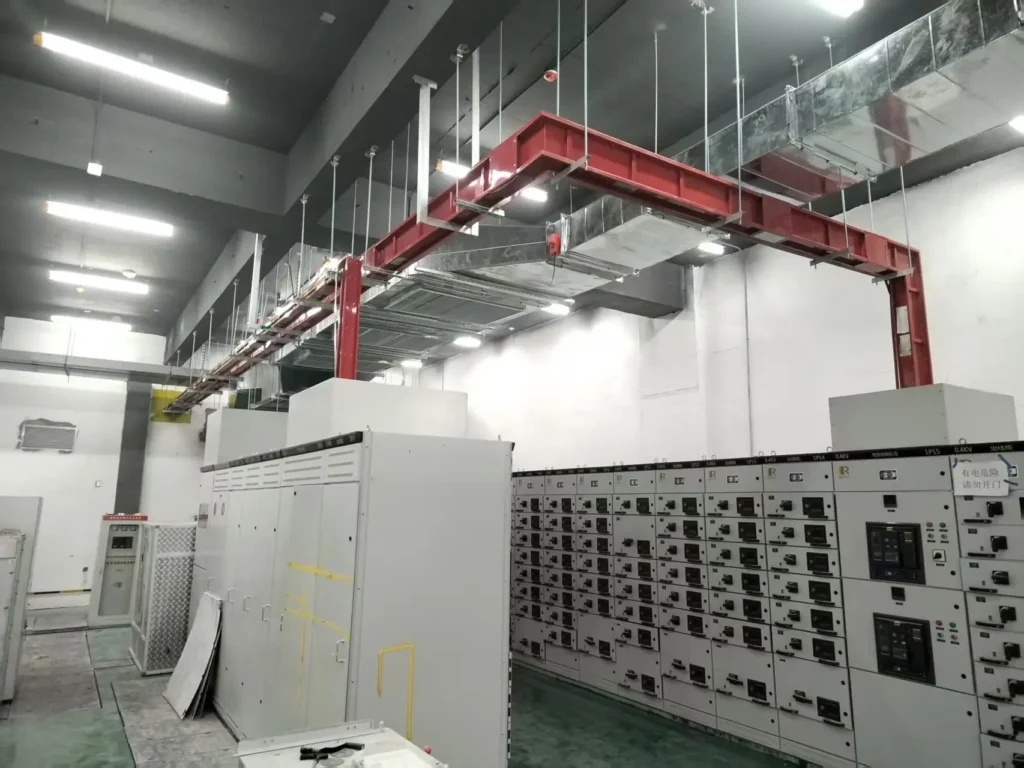
5. Post-Installation and Commissioning
- Before applying load, energize the bus duct system without load for initial power transmission.
- Verify that the total operating current does not exceed the rated current of the main busway or the design current.
- Check phase balance, joint temperature rise, and contact condition during initial operation.
- Confirm that all tap-off units, protective devices, and monitoring components operate normally.
6. Operation and Maintenance Recommendations
- Always disconnect the power supply before performing any inspection, maintenance, or repair work.
- After three months of operation, check the tightness of all joint bolts. Perform a comprehensive inspection at least once every year.
- If any abnormal condition occurs, such as overheating, unusual noise, odor, or insulation deterioration, immediately disconnect the power supply and investigate the cause.
- Eliminate adverse environmental factors that may affect normal operation, including water leakage, dust accumulation, corrosive atmosphere, vibration, and excessive heat.
Conclusion
Correct handling, proper installation, and regular maintenance are the keys to ensuring the long-term safe and reliable operation of a bus duct system. By following these busway installation guidelines, users can minimize installation risks, improve system performance, and extend the service life of their low-voltage power distribution system.
If you are looking for a reliable bus duct factory with strong engineering capabilities, please contact our technical team for professional busway design, manufacturing, and installation support.